
by DNSFilter Team on Sep 15, 2025, 10:30:00 AM
If you're comparing Cisco Umbrella vs Cloudflare for DNS security, you're evaluating two tech giants with fundamentally different approaches. Umbrella delivers enterprise-grade protection as part of Cisco's vast security ecosystem. Cloudflare offers a developer-friendly platform with CDN capabilities and a generous free tier.
But here's what matters most: which platform actually catches threats before they impact your organization?
The real questions for sophisticated security buyers are:
- Which solution identifies threats days or weeks before others even know they exist?
- Do you need a massive security suite, or best-of-breed DNS protection with the world's fastest network?
- Are you prepared to manage complex configurations, or do you need enterprise-grade protection that deploys in minutes?
- Is your mid-market organization paying for enterprise features you'll never use?
- Would your MSP benefit from a platform built specifically for managing multiple clients?
In short, here's what we recommend:
👉 Cisco Umbrella is the comprehensive choice for large enterprises already invested in the Cisco ecosystem. With DNS-layer security, secure web gateway, cloud-delivered firewall, and CASB capabilities in one platform, it offers extensive features for organizations with complex security architectures. The platform processes about 650 billion DNS requests daily and protects over 100 million users. However, this breadth comes with configuration complexity, quote-based pricing that varies by package, and management overhead that can overwhelm teams without dedicated security staff.
👉 Cloudflare serves as the performance-first option with its global CDN and security services. Operating from over 330 data centers worldwide, it excels at combining content delivery with security features. The generous free tier and developer-friendly approach make it attractive for organizations needing both web performance and DNS protection. While increasingly sophisticated with AI-powered threat detection, DNS security remains one service among many in their portfolio.
Both platforms offer extensive capabilities. But in DNS security, the speed of threat detection determines whether you block attacks or clean up after them.
👉 DNSFilter delivers best-of-breed DNS threat protection, using AI to identify threats an average of 10 days before they appear in traditional threat feeds, and in some cases, catching threats up to 59 days earlier. Operating the world's fastest DNS network ensures security never compromises performance. Purpose-built for rapid deployment and intuitive management, it provides enterprise-grade protection ideal for mid-market organizations (1,000-5,000 employees) and MSPs who need effective threat blocking without the complexity. With transparent pricing and switching incentives like 6 months free when switching from Umbrella, DNSFilter proves that superior protection doesn't require enterprise complexity.
See how DNSFilter's AI catches threats 10 days faster with a 14-day free trial.
Table of contents:
- Cisco Umbrella vs Cloudflare vs DNSFilter at a glance
- The fundamental disconnect: Suite solutions vs best-of-breed protection
- Cisco Umbrella excels at breadth (but struggles with deployment complexity)
- Cloudflare wins on CDN integration (but DNS security isn't its primary focus)
- DNSFilter catches threats 10 days faster (with the world's fastest DNS network)
- Real threat detection speed: The 10-day advantage that changes everything
- Deployment complexity vs protection in minutes
- Why mid-market organizations are switching from enterprise suites
- MSP considerations: Managing multiple clients efficiently
- Support quality when threats are active
- Cisco Umbrella vs Cloudflare vs DNSFilter: Which should you choose?
Cisco Umbrella vs Cloudflare vs DNSFilter at a glance
| Cisco Umbrella | Cloudflare | DNSFilter | |
|---|---|---|---|
|
Core Focus |
⭐⭐⭐⭐ Comprehensive security platform |
⭐⭐⭐ CDN with security features |
⭐⭐⭐⭐⭐ Best-of-breed DNS security |
|
Threat Detection Speed |
⭐⭐⭐ Traditional threat feeds |
⭐⭐⭐⭐ AI-enhanced protection |
⭐⭐⭐⭐⭐ 10 days faster with AI |
|
Network Performance |
⭐⭐⭐⭐ Enterprise-grade |
⭐⭐⭐⭐⭐ Global CDN network |
⭐⭐⭐⭐⭐ World's fastest DNS network |
|
Deployment Time |
⭐⭐⭐ Hours to days for full suite |
⭐⭐⭐⭐ Quick for basic features |
⭐⭐⭐⭐⭐ Minutes to full protection |
|
Policy Management |
⭐⭐ Complex configuration |
⭐⭐⭐⭐ User-friendly interface |
⭐⭐⭐⭐⭐ Intuitive, 80+ categories |
|
Ideal Organization Size |
⭐⭐⭐⭐⭐ 5,000+ employees |
⭐⭐⭐⭐ Any size |
⭐⭐⭐⭐⭐ 1,000-5,000 employees |
|
MSP-Friendly |
⭐⭐⭐ Available but complex |
⭐⭐ Limited MSP features |
⭐⭐⭐⭐⭐ Purpose-built for MSPs |
|
Roaming Client Management |
⭐⭐⭐ Enterprise deployment |
⭐⭐⭐ Basic roaming |
⭐⭐⭐⭐⭐ Simple endpoint protection |
|
Customer Support |
⭐⭐⭐ Varies by tier |
⭐⭐ Community-focused |
⭐⭐⭐⭐⭐ Responsive, expert support |
The fundamental disconnect: Suite solutions vs best-of-breed protection
The DNS security market has reached an inflection point: 80-90% of organizations already have some form of filtering technology deployed, most commonly Cisco Umbrella. The question isn’t whether you need DNS security, but whether your current solution catches threats fast enough.
Cisco Umbrella emerged from OpenDNS, acquired by Cisco in 2015 for $635 million. The strategy was to create a comprehensive cloud security platform within Cisco's broader Secure Access Service Edge (SASE) architecture. Today, it includes DNS security, a secure web gateway, a cloud-delivered firewall, and CASB capabilities, all designed for enterprises that want everything from a single vendor.

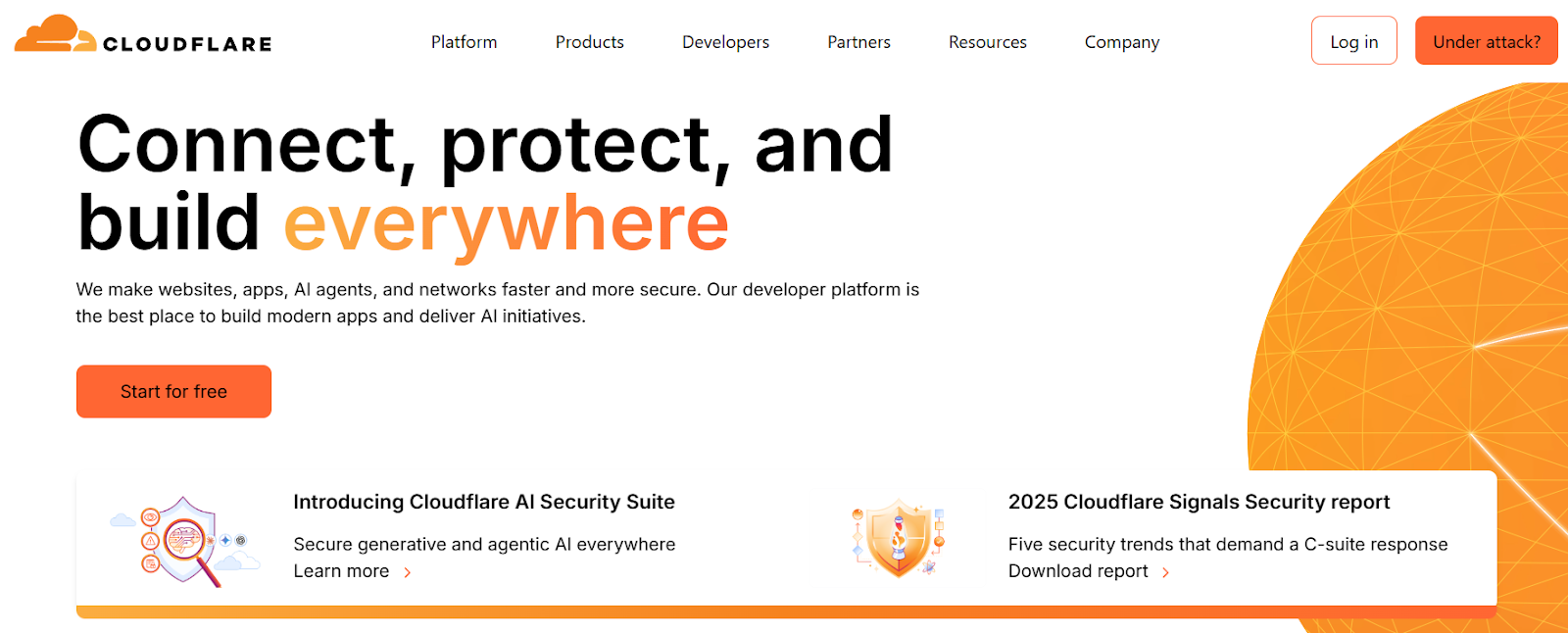
Cloudflare started in 2009 with a mission to build a better internet through content delivery and DDoS protection. DNS security evolved as one component of their broader platform. Their strength lies in their massive global network and developer-friendly approach, though DNS filtering competes for innovation resources with their many other services.
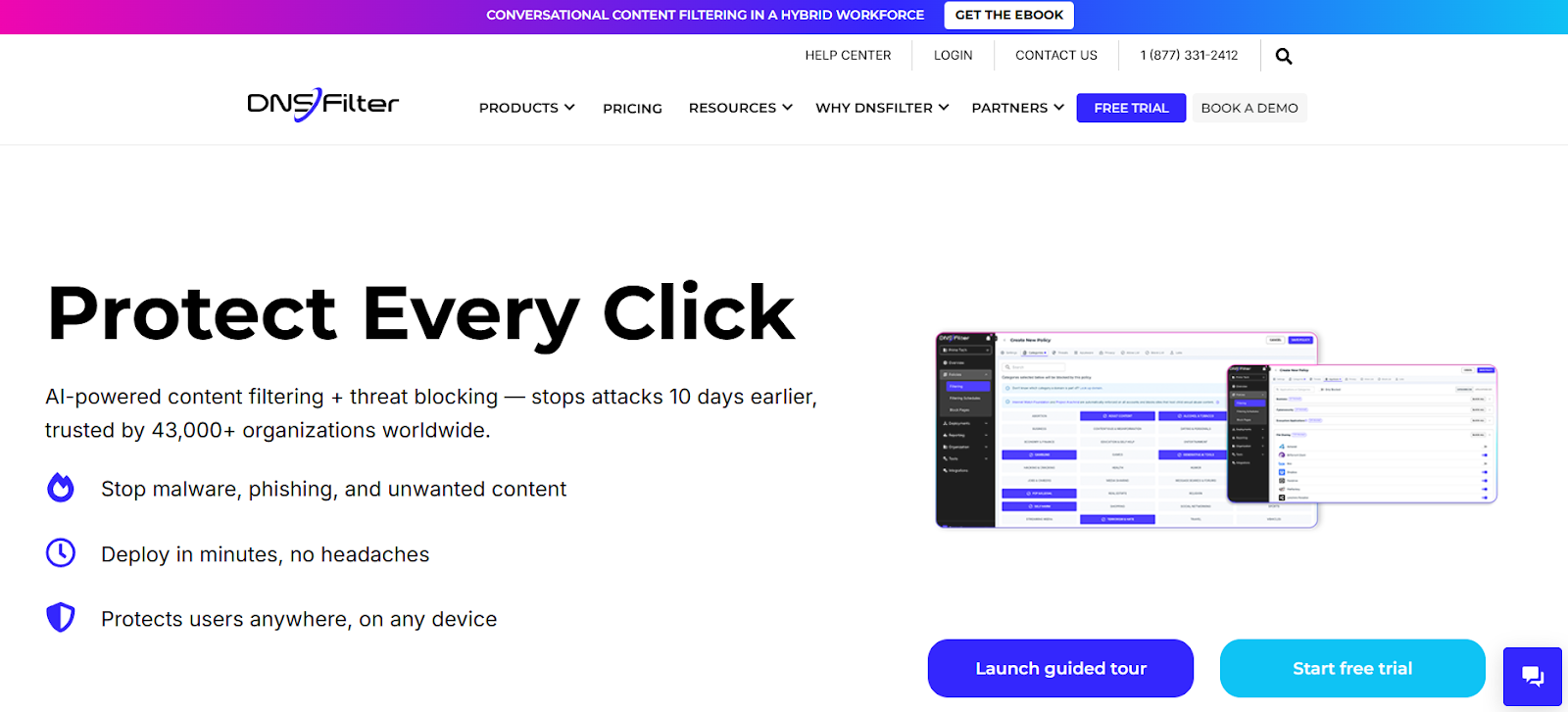
DNSFilter was founded in 2015 by Ken Carnesi, frustrated with existing DNS security solutions that were either ineffective or unnecessarily complex. By maintaining laser focus on DNS threat protection, they've achieved what broader platforms haven't: AI models that identify threats an average of 10 days before they appear in traditional feeds, running on the world's fastest DNS network.
Cisco Umbrella excels at breadth (but struggles with deployment complexity)
Cisco Umbrella offers impressive security capabilities, processing about 650 billion DNS requests daily and protecting over 100 million users across more than 18,500 businesses.
The integrated platform includes advanced threat intelligence from Cisco Talos and seamless integration with other Cisco products. For large enterprises already invested in the Cisco ecosystem, especially those with existing enterprise agreements where Umbrella is often bundled, it provides unified security managed from a single dashboard.
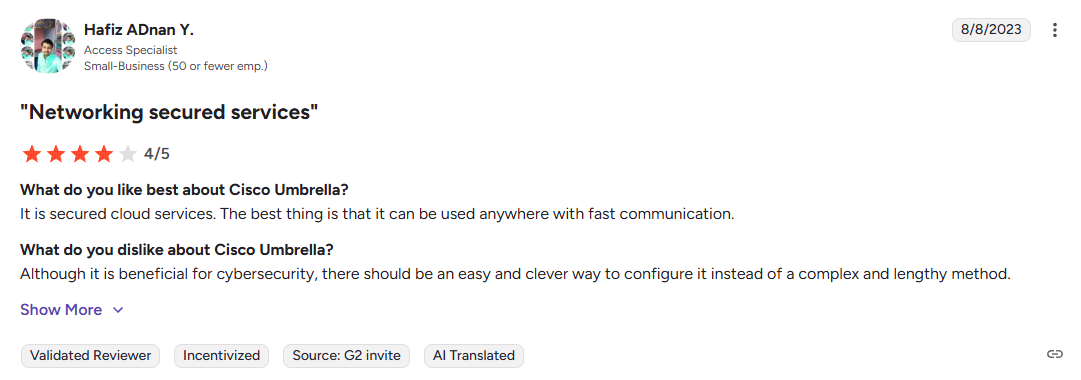
However, this comprehensiveness creates deployment and management challenges. Setting up Umbrella's advanced features requires significant expertise. Policy configuration, roaming client deployment, and integration with existing infrastructure can take days or weeks. Organizations frequently need professional services just for proper configuration, adding to the total implementation cost.
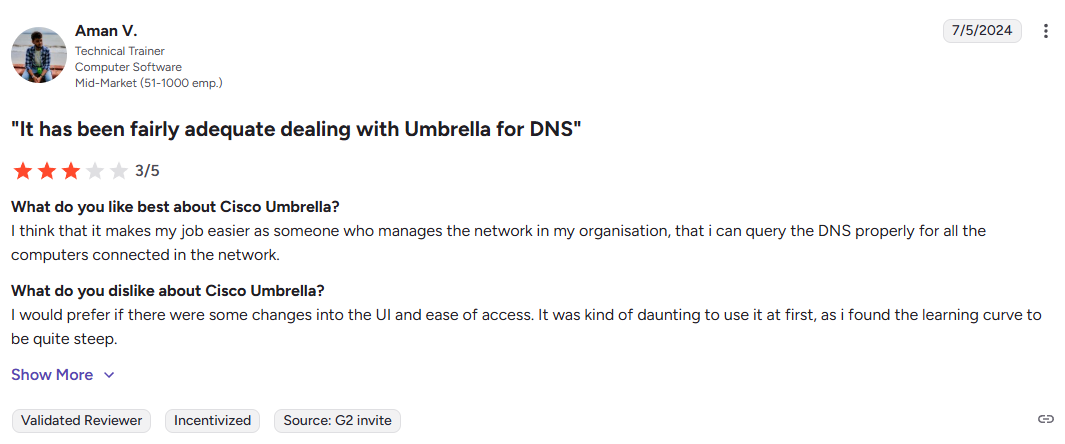
The management complexity extends beyond initial deployment. The dashboard, while comprehensive, requires dedicated security professionals to navigate effectively. For mid-market organizations (1,000-5,000 employees) without large security teams, this overhead often outweighs the benefits of having everything from one vendor.
Source: G2
Cloudflare wins on CDN integration (but DNS security isn't its primary focus)
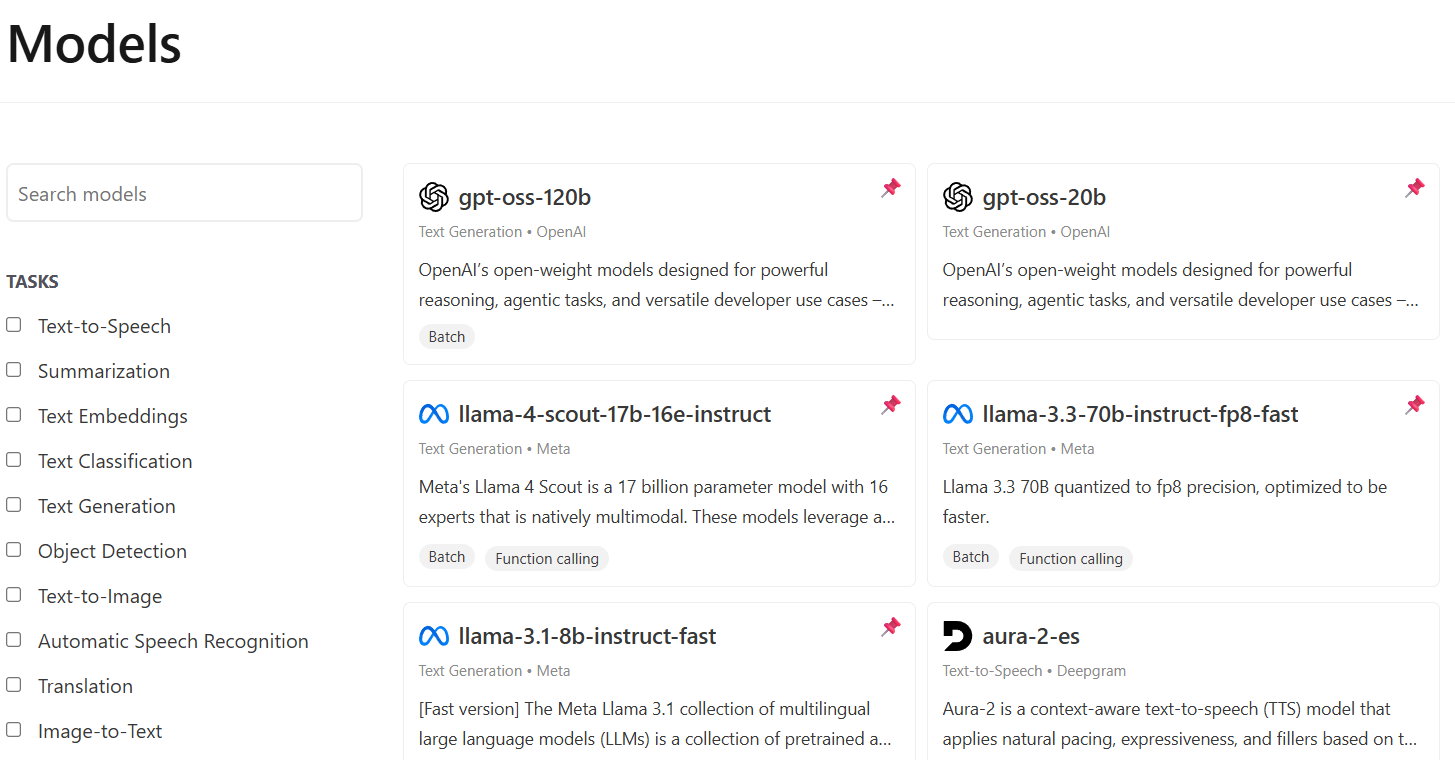
Cloudflare's DNS security integrates closely with its CDN and performance optimization services. With over 330 data centers worldwide, they excel at delivering content quickly while providing security features.
The platform offers genuine ease of use with a generous free tier. Setting up basic DNS filtering is straightforward, and the interface is genuinely user-friendly. Cloudflare has invested in DNS security capabilities, including AI-powered threat detection and sophisticated policy controls through their Gateway product.
For organizations primarily focused on web performance that want DNS security included, Cloudflare provides solid protection. However, because DNS security is one service among many, organizations requiring best-of-breed threat detection may find purpose-built solutions deliver superior focus and innovation in catching emerging threats.
DNSFilter catches threats 10 days faster (with the world's fastest DNS network)
This is where specialized innovation delivers measurable advantages. While Umbrella and Cloudflare add features across their platforms, DNSFilter's singular focus on DNS security has produced breakthrough results in threat detection speed, which is ultimately the metric that matters most.
DNSFilter's AI-powered threat detection identifies dangerous sites an average of 10 days before competitors. During testing, their Malicious Domain Protection feature identified over 7,000 risky domains not on any other threat intelligence feeds. The platform identifies 61% more threats than competitors, with documented cases of threats caught 59 days before appearing in traditional feeds.
This isn’t luck, but rather an architectural advantage. DNSFilter processes over 200 billion queries daily from organizations around the world., using this data to train machine learning models that identify patterns in malicious domains before they're weaponized. The AI detects domains created by Domain Generation Algorithms (DGAs), commonly used by malware to evade traditional detection.
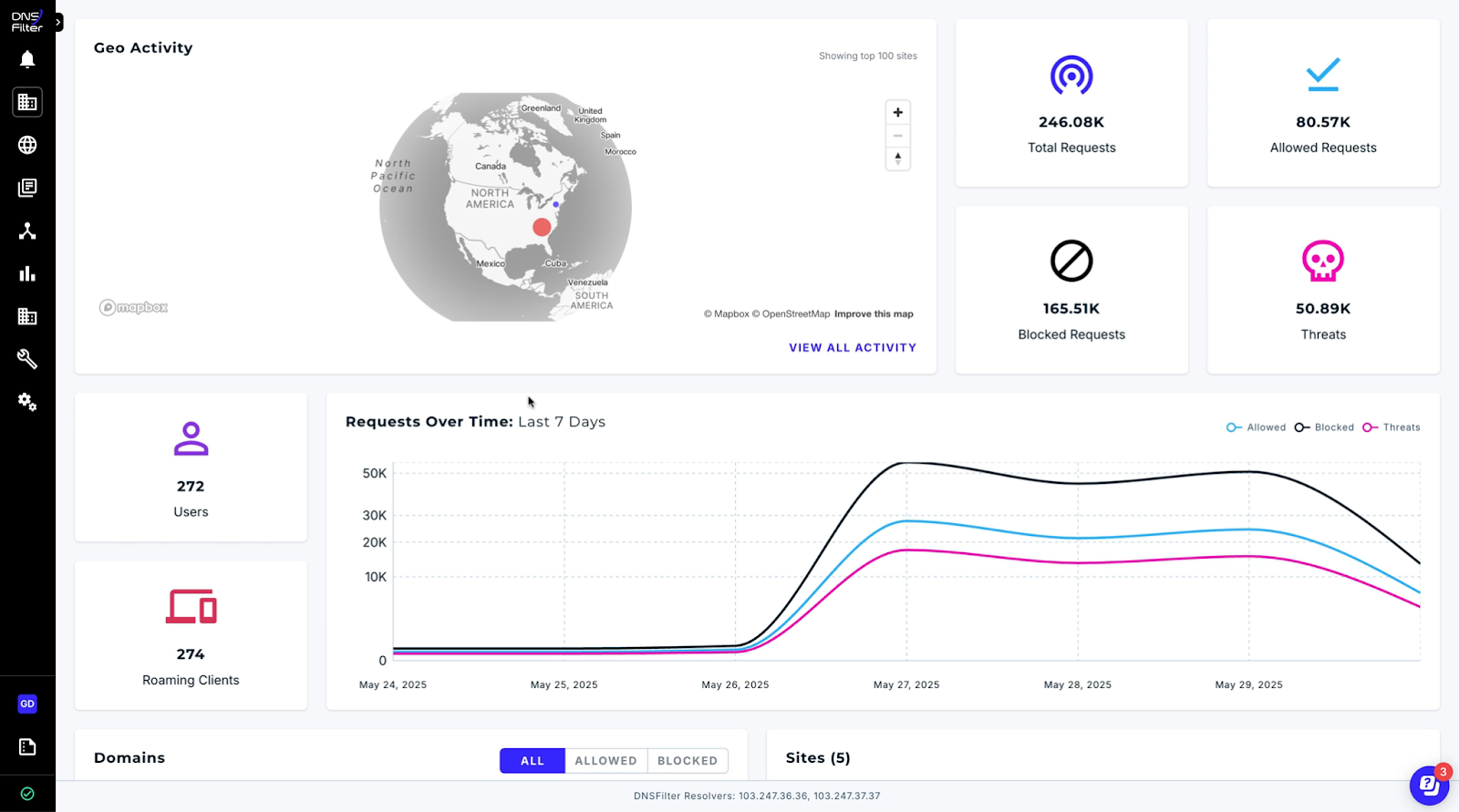
Equally important: DNSFilter operates the world's fastest DNS network, ensuring that superior security doesn't compromise performance. This combination of fastest threat detection and fastest network infrastructure makes it the best-of-breed choice for organizations prioritizing both security effectiveness and user experience.
Source: DNSFilter
The platform includes approximately 80 content filtering categories out of the box, making policy configuration intuitive even for IT generalists. Roaming client deployment for remote workers is straightforward, with support for Windows, Mac, iOS, Android, and ChromeOS.
Real threat detection speed: The 10-day advantage that changes everything
In DNS security, every day matters. Threats that exist for even hours can compromise hundreds of users. The 10-day detection advantage isn’t just a statistic; it’s the difference between prevention and remediation.
Cisco Umbrella relies on Cisco Talos threat intelligence, which aggregates data from multiple sources. While comprehensive, this traditional approach means you're often blocking threats only after they've been active in the wild.
Cloudflare combines traditional threat intelligence feeds with machine learning for more sophisticated protection than basic DNS filtering. Their massive network provides visibility into emerging threats, though DNS security innovation competes with their other priorities.
DNSFilter's approach is fundamentally different. Their machine learning models analyze domain strings in real-time, identifying characteristics suggesting malicious intent for domains never seen before. This means blocking zero-day threats that don't appear in any feed.
With a false positive rate under 1% based on 2021 testing with Scamadviser,the AI demonstrates not only aggressiveness but also accuracy. When blocking 200 million threats daily, that precision ensures security without disrupting business operations.
Deployment complexity vs protection in minutes
For mid-market organizations and MSPs, deployment speed directly impacts security posture and operational efficiency.
Cisco Umbrella can provide rapid basic DNS protection, but implementing comprehensive features is complex. Organizations may need to deploy virtual appliances for Active Directory integration, configure multiple policies, set up the secure web gateway, and potentially engage professional services. Even basic policy configuration and roaming client management prove challenging for teams without dedicated security expertise.
Source: G2
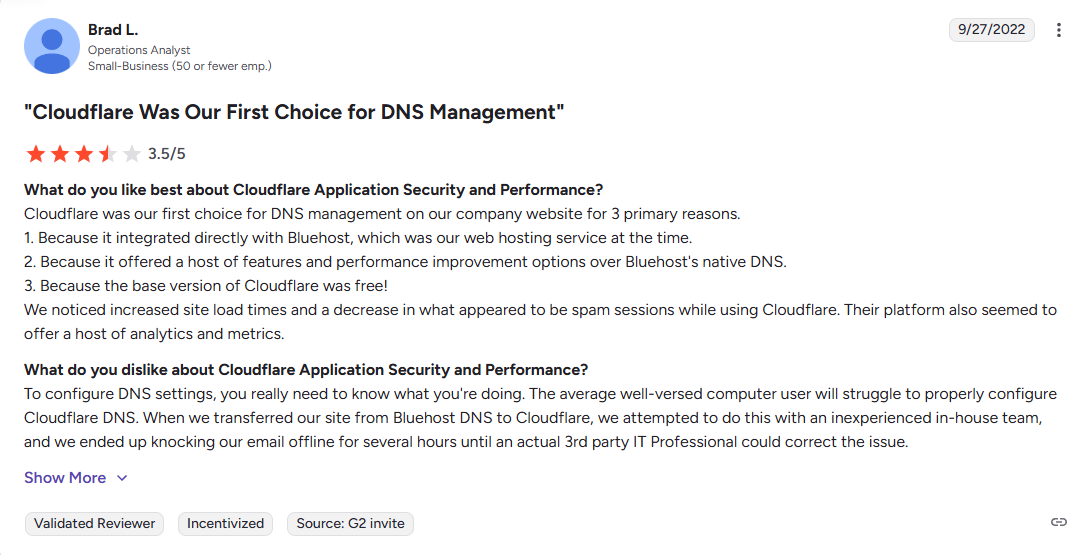
Cloudflare's basic DNS setup is simple for existing CDN customers. But implementing sophisticated policies or integrating with your security stack increases complexity accordingly.
Source: G2
DNSFilter was architected for rapid deployment. The typical process: create a policy from 80 pre-configured categories, define a block page, add your network, and point DNS to DNSFilter's servers. Even roaming client deployment for remote workers is straightforward across all major platforms. MSPs regularly highlight DNSFilter's quick deployment as crucial for managing multiple client environments efficiently.
Why mid-market organizations are switching from enterprise suites
The mid-market (1,000-5,000 employees) faces a unique challenge: they need enterprise-grade protection but lack enterprise resources for complex security management.
Cisco Umbrella's enterprise focus often proves excessive for mid-market needs. These organizations pay for SASE capabilities, advanced integrations, and features designed for companies with dedicated SOCs. The management overhead alone can overwhelm lean IT teams who need protection that just works.
This explains why mid-market organizations are increasingly choosing best-of-breed solutions over bundled suites. They need:
- Enterprise-grade threat detection without enterprise complexity
- Fast deployment without professional services requirements
- Intuitive management that doesn't require security specialists
- Protection that scales with their growth
- Transparent pricing aligned with their budgets
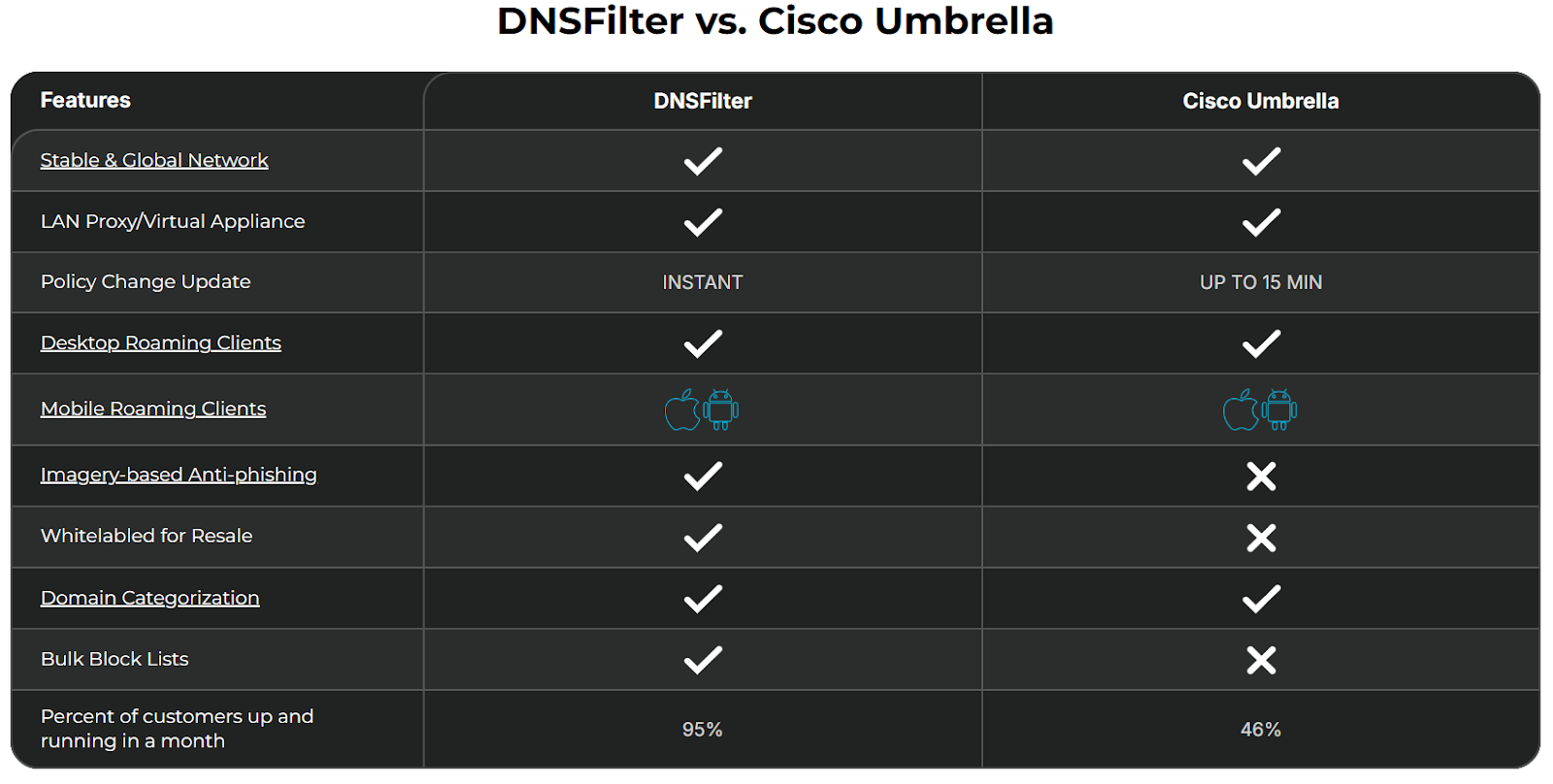
DNSFilter addresses these needs directly, offering enterprise-grade protection optimized for mid-market realities. To ease the transition, they offer switching incentives like 6 months free for organizations moving from Umbrella, recognizing that 80–90% of prospects already have filtering technology deployed.
Source: DNSFilter
MSP considerations: Managing multiple clients efficiently
For Managed Service Providers, platform choice dramatically impacts operational efficiency and profitability.
Cisco Umbrella offers MSP programs but inherits the platform's complexity. Managing multiple client deployments, each with unique configurations and policies, becomes time-intensive. The learning curve for technicians can impact service delivery timelines.
Cloudflare's limited MSP-specific features mean providers often cobble together solutions using standard business accounts, complicating multi-tenant management.
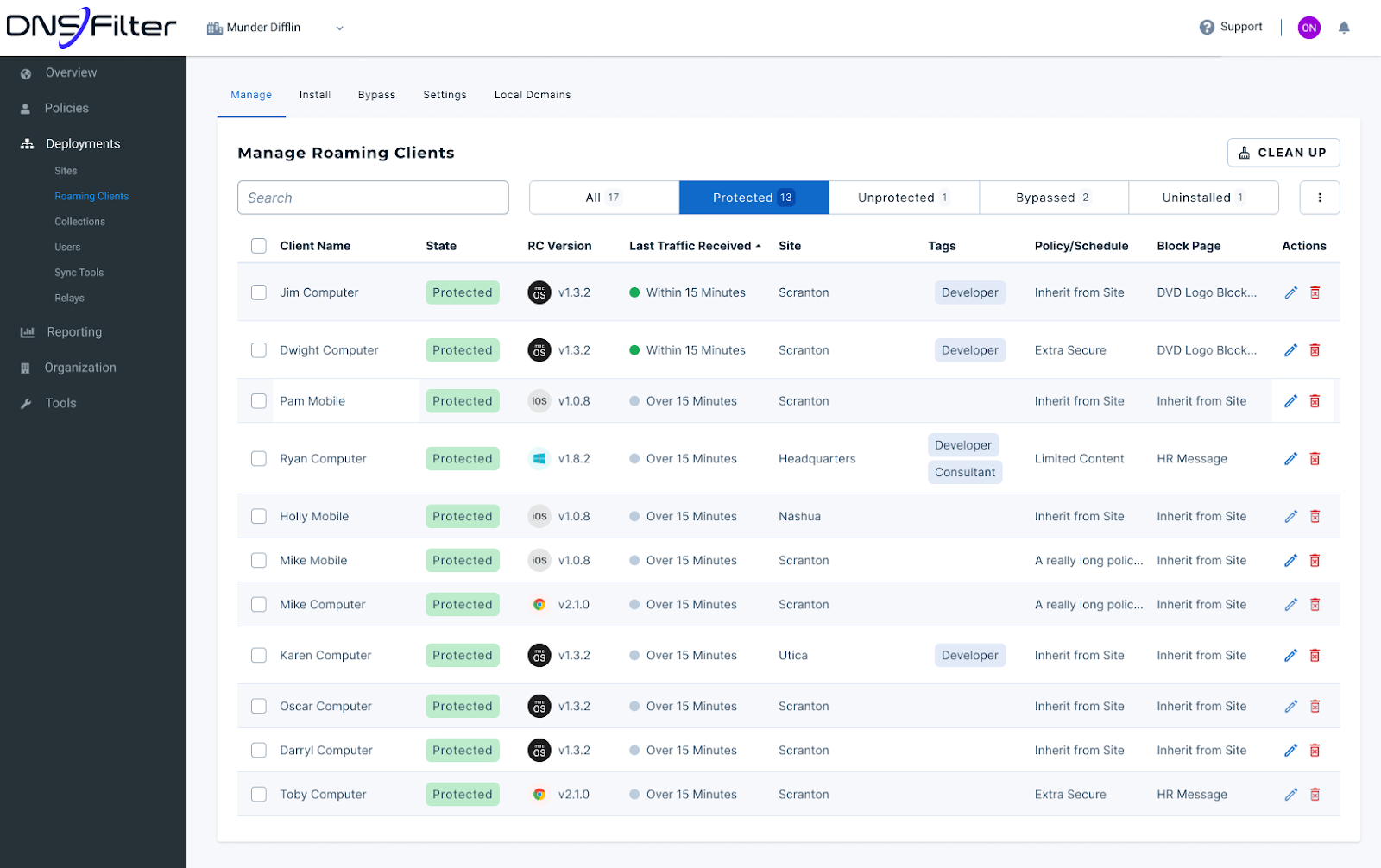
DNSFilter was built with MSPs as a primary audience. The platform enables:
- Rapid client onboarding (often under 10 minutes)
- Centralized management across all clients
- Granular policy control without complexity
- Land-and-expand opportunities with zero friction
- Branding options for branded service delivery
Source: DNSFilter
Small MSPs can start with just their own protection, then seamlessly add clients over time. This organic growth model explains why almost half of DNSFilter's traffic comes from organizations under 100 employees, as these are often MSPs who later expand by adding their clients.
Support quality when threats are active
During active security incidents, support quality determines outcome severity.
Cisco Umbrella's support varies by tier, with basic plans receiving email support with multi-day response times. Premium support often involves tiered escalation before reaching deep expertise. Users report frustration during critical incidents when time matters most.
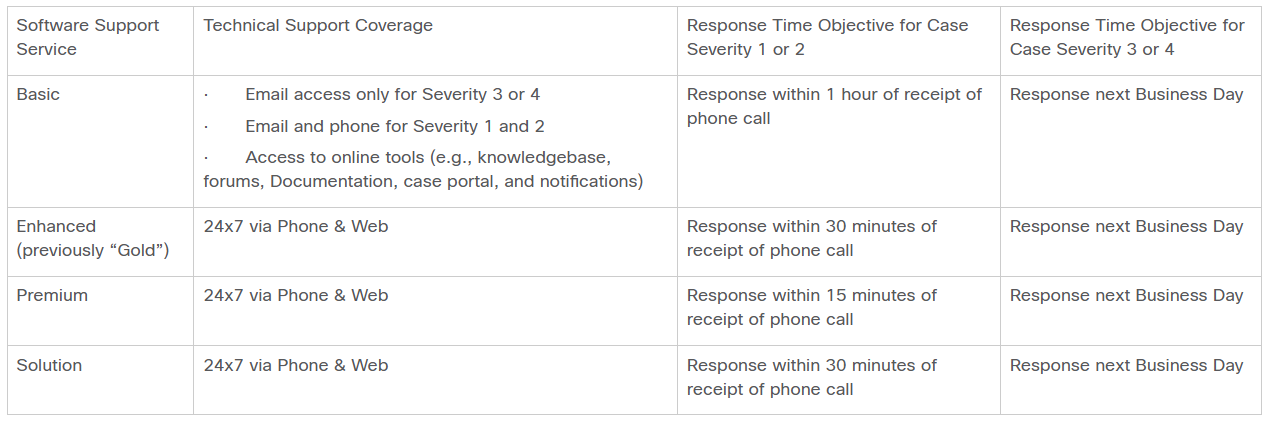
Cloudflare provides excellent documentation but limited human support outside enterprise plans. This becomes problematic during security incidents requiring immediate expert assistance.
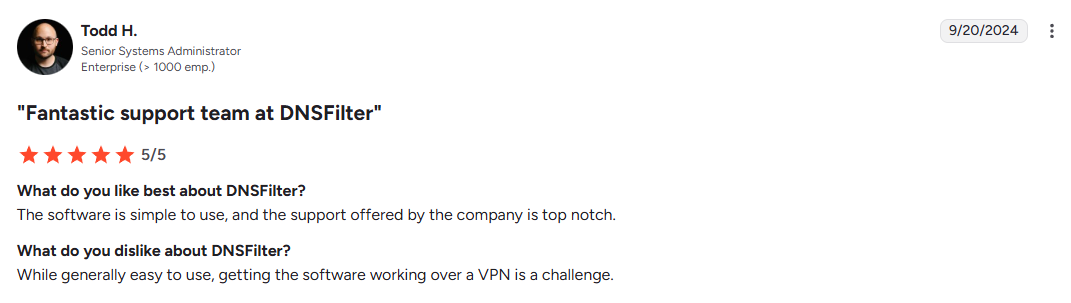
DNSFilter has built its reputation on responsive, expert support. Users consistently praise the support team's availability and expertise. Direct access to security professionals who understand both the platform and active threats reflects the company's founding principle of providing support that actually helps when you need it.
Source: G2
Cisco Umbrella vs Cloudflare vs DNSFilter: Which should you choose?
The choice depends on your organization's specific requirements, existing investments, and operational realities.
Choose Cisco Umbrella if:
- You're a large enterprise (5,000+ employees) with complex security requirements
- You have existing Cisco enterprise agreements with bundled pricing
- You need integrated SASE capabilities beyond DNS security
- You have dedicated security staff for platform management
- You prioritize vendor consolidation over best-of-breed solutions
Choose Cloudflare if:
- Your primary need is CDN and performance optimization
- You want DNS filtering as part of broader web services
- You're comfortable with community support for non-enterprise plans
- You need both web performance and security from one platform
- You're already using Cloudflare for other services
Choose DNSFilter if:
- You need threats caught 10 days before traditional feeds
- You're a mid-market organization (1,000-5,000 employees) needing enterprise-grade protection
- You want the world's fastest DNS network without compromising security
- You're an MSP requiring efficient multi-client management
- You value responsive, expert support during incidents
- You prefer best-of-breed solutions over bundled suites
- You're ready to switch from your current solution (ask about 6 months free when switching from Umbrella)
See how DNSFilter compares to Cisco Umbrella and Cloudflare. Start your free trial today.
The DNS security landscape has evolved beyond simple filtering. While Cisco Umbrella and Cloudflare offer impressive platform capabilities, DNSFilter proves that focused innovation in threat detection delivers superior protection for organizations that prioritize catching threats before damage occurs.
For mid-market organizations and MSPs, the choice often comes down to this: Do you need everything from everyone, or do you need the best DNS threat protection available? In a world where threats launch daily and bad actors constantly evolve their tactics, the platform that catches threats 10 days faster is not just marginally better; instead, it is fundamentally more protective.

 SecureTransit for MSPs: Digital Privacy Without Another Tool to Manage
MSPs need to boost client security without sacrificing efficiency or margin. Every extra tool, console, or license just adds overhead and slows down service delivery.
Privacy is a classic example. Clients want their remote and hybrid users protected from the networks they connect through and the trackers profiling them, but most solutions add another siloed tool and more operational work.