
by DNSFilter Team on Sep 4, 2025, 10:15:00 AM
For organizations evaluating DNS-layer security and network protection platforms, the choice often comes down to these critical factors:
- Do you need comprehensive DNS-layer security or a full network security platform with integrated firewalls?
- Is your priority blocking threats before they reach your network or inspecting traffic at multiple layers?
- Are you looking for rapid deployment with minimal management overhead or prepared for complex implementations?
- Do you want enterprise-grade features at enterprise complexity or superior protection with streamlined operations?
- Is your team equipped to manage multiple security appliances or do you need something that delivers results immediately?
Here's what our analysis reveals:
👉 Cisco Umbrella is the enterprise DNS security solution that blocks threats at the internet's foundation layer. With over 180 billion daily DNS requests processed and integration into Cisco's broader SASE architecture, it provides comprehensive protection for large organizations. While basic deployment can be quick, achieving full functionality requires virtual appliances, client migrations, and extensive configuration. This explains why the quote-based pricing model reflects its enterprise focus.
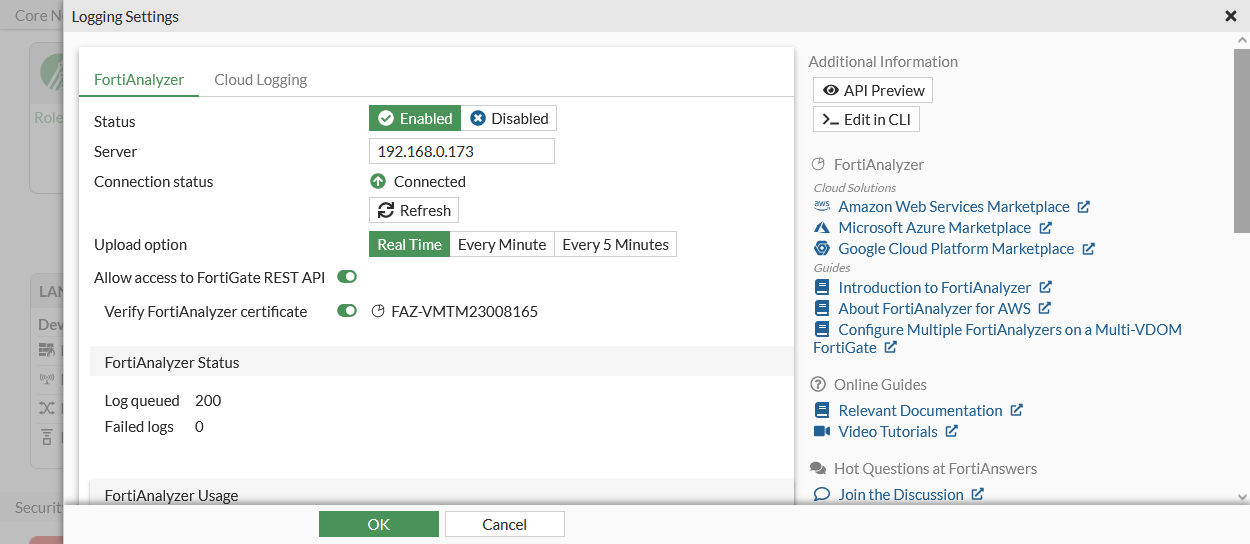
👉 Fortinet offers an integrated security fabric centered around its FortiGate next-generation firewalls. Powered by custom ASICs for performance optimization, it provides everything from firewalls to SD-WAN in a unified platform. The learning curve is steep, firmware updates require careful management, and the ecosystem of FortiManager, FortiAnalyzer, and other components demands certified expertise.
Both platforms target enterprises with substantial IT resources and complex requirements. But what if you need protection that actually catches threats faster without the operational burden?
👉 DNSFilter delivers AI-powered DNS threat protection that identifies malicious domains an average of 10 days before traditional threat feeds, making it the fastest threat detection solution in the industry. Operating the world's fastest DNS network, it deploys in minutes and manages from an intuitive dashboard. With transparent per-user pricing and a focus on what matters most (catching threats others miss), it's the choice for mid-market organizations and MSPs that want superior protection without complexity.
Ready to see how DNSFilter catches threats 10 days faster? Start your 14-day free trial.
Table of contents:
- Cisco Umbrella vs Fortinet vs DNSFilter at a glance
- The fundamental divide: DNS-layer vs full-stack security
- Cisco Umbrella: Enterprise integration with operational overhead
- Fortinet: Performance through complexity
- DNSFilter: Where threat detection speed meets operational efficiency
- Threat detection reveals the real differentiators
- Deployment complexity exposes target markets
- Why MSPs choose DNSFilter
- Cisco Umbrella vs Fortinet vs DNSFilter: Making the right choice
Cisco Umbrella vs Fortinet vs DNSFilter at a glance
|
|
Cisco Umbrella |
Fortinet |
DNSFilter |
|---|---|---|---|
|
Primary Function |
DNS-layer security with SASE integration |
Full security platform with NGFW |
AI-powered DNS filtering with fastest threat detection |
|
Threat Detection Speed |
⭐⭐⭐⭐ Strong with Talos intelligence and predictive capabilities |
⭐⭐⭐⭐ FortiGuard with AI-driven detection |
⭐⭐⭐⭐⭐ 10 days ahead of traditional feeds |
|
Network Performance |
⭐⭐⭐⭐ Enterprise-grade infrastructure |
⭐⭐⭐⭐⭐ Hardware-accelerated with custom ASICs |
⭐⭐⭐⭐⭐ World's fastest DNS network |
|
Deployment Time |
⭐⭐⭐ Hours to days for full features |
⭐⭐⭐ Days to weeks for Security Fabric |
⭐⭐⭐⭐⭐ Minutes to operational |
|
Management Complexity |
⭐⭐⭐ Multiple components and policies |
⭐⭐⭐ Requires certified expertise |
⭐⭐⭐⭐⭐ Single intuitive dashboard |
|
MSP Optimization |
⭐⭐⭐⭐ Multi-tenant available |
⭐⭐⭐ Available but complex |
⭐⭐⭐⭐⭐ Purpose-built for MSPs |
|
Content Categories |
⭐⭐⭐⭐ Comprehensive categories |
⭐⭐⭐⭐ Full content filtering |
⭐⭐⭐⭐⭐ 80+ categories out of the box |
|
Pricing Model |
⭐⭐ Quote-based only |
⭐⭐ Configuration-dependent |
⭐⭐⭐⭐⭐ Transparent per-user |
The fundamental divide: DNS-layer vs full-stack security
The comparison reveals distinct architectural philosophies that determine operational reality.
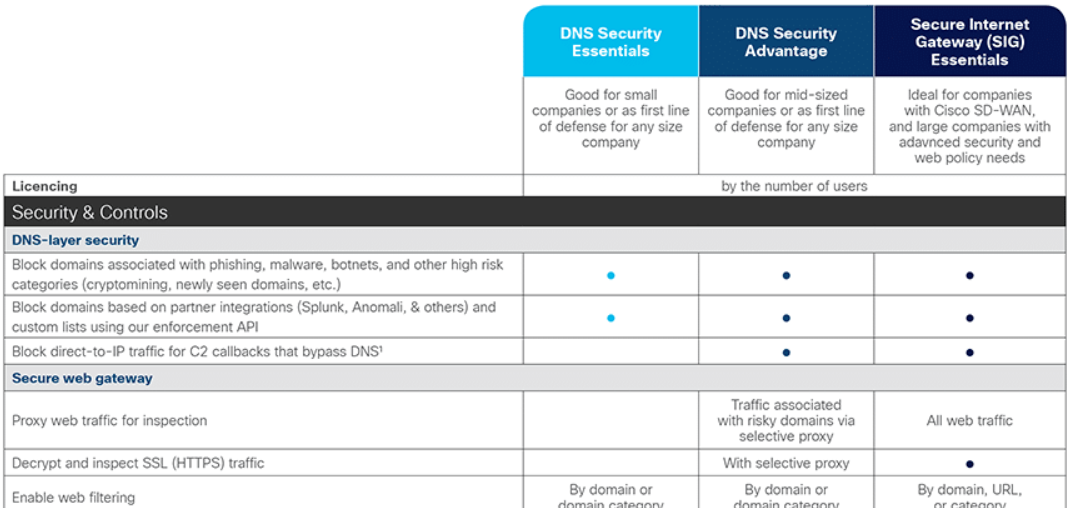
Cisco Umbrella operates at the DNS layer, intercepting domain queries before connections are established. As part of Cisco's SASE strategy, Umbrella has expanded from pure DNS security into broader cloud security capabilities, adding secure web gateway features and cloud-delivered firewall functions. This expansion, however, comes with increased deployment and management complexity.

Fortinet's Security Fabric philosophy provides integrated security across the entire network stack. FortiGate firewalls anchor the architecture, performing deep packet inspection while FortiManager, FortiAnalyzer, and additional components provide centralized control. The platform's custom Security Processing Units deliver impressive performance, though leveraging full capabilities requires significant expertise.
DNSFilter focuses exclusively on perfecting DNS-layer security with one critical advantage: catching threats 10 days before competitors. By specializing rather than expanding, they've built a platform that deploys rapidly while delivering threat detection that consistently outperforms more complex alternatives. Their AI analyzes 89 billion daily queries to identify malicious domains the moment they emerge—before they appear on traditional threat feeds.
Cisco Umbrella: Enterprise integration with operational overhead
Cisco Umbrella processes over 200 billion DNS requests daily from over 100 million users, providing massive scale and threat visibility. Integration with Cisco Talos threat intelligence and predictive machine learning models enables comprehensive threat coverage. For organizations already invested in Cisco's ecosystem, Umbrella integrates with products like Cisco Secure Endpoint and SD-WAN solutions.
However, achieving Umbrella's full capabilities requires significant operational investment. While basic DNS protection involves pointing DNS forwarders to Umbrella, organizations wanting Active Directory integration and granular visibility must deploy virtual appliances. The roaming client has been migrating to Cisco Secure Client, a process many organizations find complex. Secure web gateway features require IPsec tunnels, proxy chaining, or additional forwarding methods—each adding configuration overhead.
Most significantly, Cisco maintains quote-based pricing exclusively, with costs escalating as organizations scale. Advanced features, detailed reporting, and additional threat intelligence often incur separate charges. For enterprises with existing Cisco agreements, Umbrella may be bundled, but mid-market organizations often find the total cost of ownership challenging to justify.
Fortinet: Performance through complexity
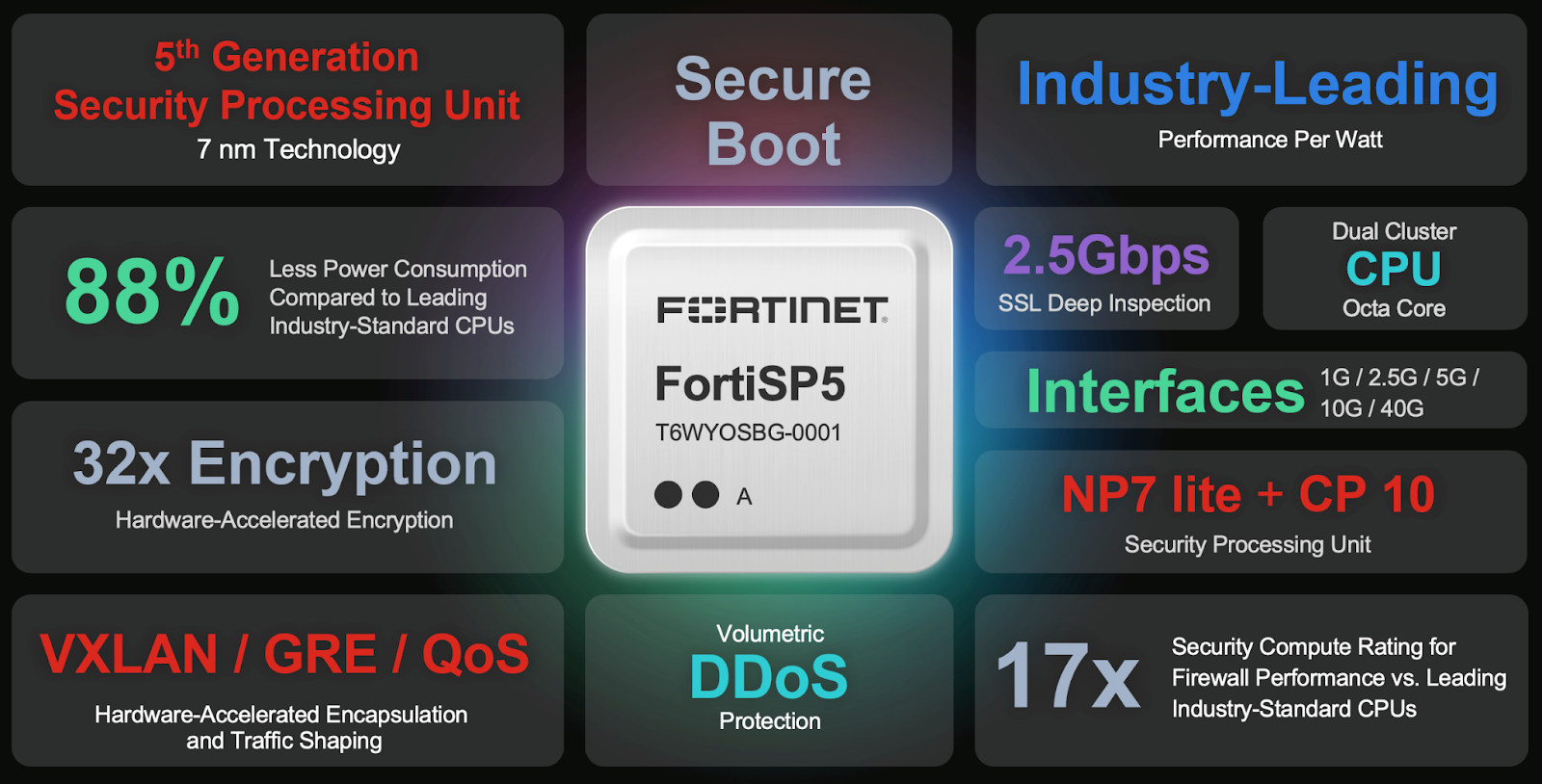
Fortinet's engineering excellence shows in their custom Security Processing Units. The FortiSP5 chip delivers 17 times faster firewall performance and 32 times quicker encryption than standard CPUs. For organizations requiring deep packet inspection without bottlenecks, FortiGate delivers exceptional throughput. The Security Fabric extends beyond firewalls to include SD-WAN, endpoint protection, and cloud security, all managed through FortiManager.
Yet this power comes with operational challenges. Firmware updates can introduce instabilities, with experienced administrators recommending waiting for maintenance releases. FortiOS mastery requires investment, and many configurations require command-line expertise. The certification program spans multiple levels, reflecting the platform's learning curve. Support experiences vary significantly, with inconsistent first-line expertise reported frequently.
For organizations with dedicated security teams and complex requirements, Fortinet provides comprehensive capabilities. But mid-market companies often find the operational overhead exceeds their capacity.
DNSFilter: Where threat detection speed meets operational efficiency
DNSFilter represents a different philosophy: superior threat detection shouldn't require operational complexity.
The platform's defining advantage is that it identifies threats 10 days before competitors because its AI analyzes domain characteristics in real time. This isn't incremental improvement; it's 61% more threats caught than traditional approaches. During testing, DNSFilter identified over 7,000 risky domains not on any threat feeds, with one domain caught 59 days before appearing elsewhere.
Operating the world's fastest DNS network ensures this superior protection doesn't impact performance. Deployment completes in minutes: change DNS settings, create policies, and protection is active. No virtual appliances, no complex integrations, no command-line configuration. The roaming client provides consistent protection across Windows, Mac, iOS, Android, and ChromeOS without the migration challenges plaguing enterprise alternatives.
AppAware enables one-click blocking of over 100 applications and their associated domains. The platform includes 80+ content categories out of the box, from standard business policies to specialized categories like CSAM protection. Every feature is accessible through an intuitive dashboard that IT teams master quickly.
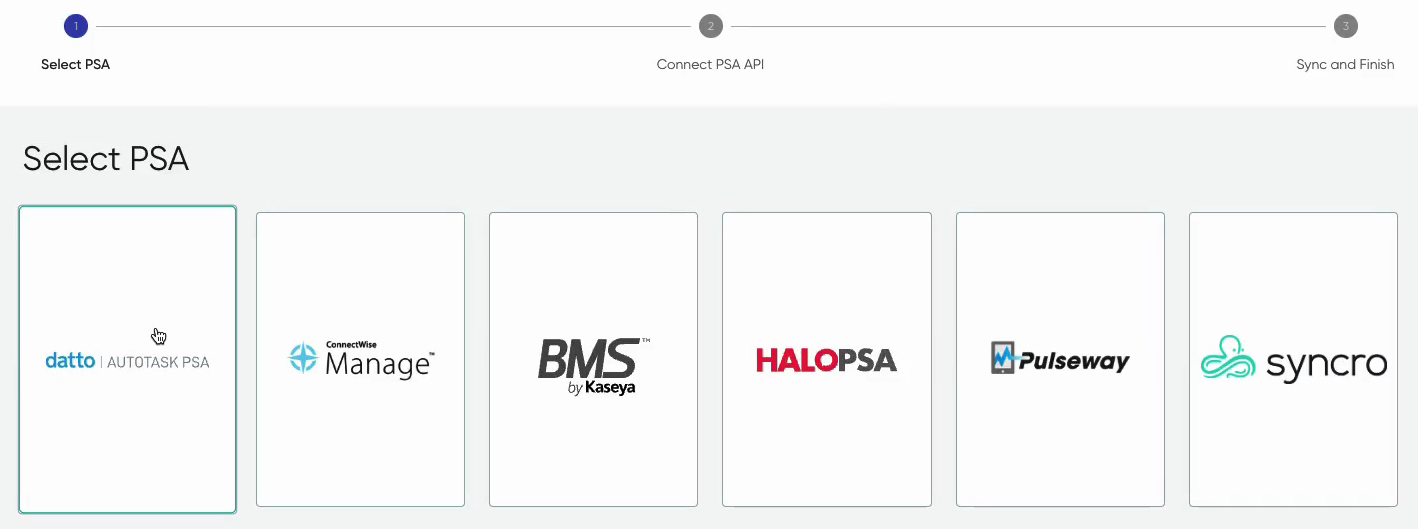
For MSPs - DNSFilter's primary vertical focus - the platform includes true multi-tenancy, branding, and PSA integrations with ConnectWise and Datto. Over 3,100 MSPs trust DNSFilter to protect their clients, appreciating both the technical superiority and operational efficiency.
Source: DNSFilter
Threat detection reveals the real differentiators
The speed of threat identification exposes each platform's true capabilities.
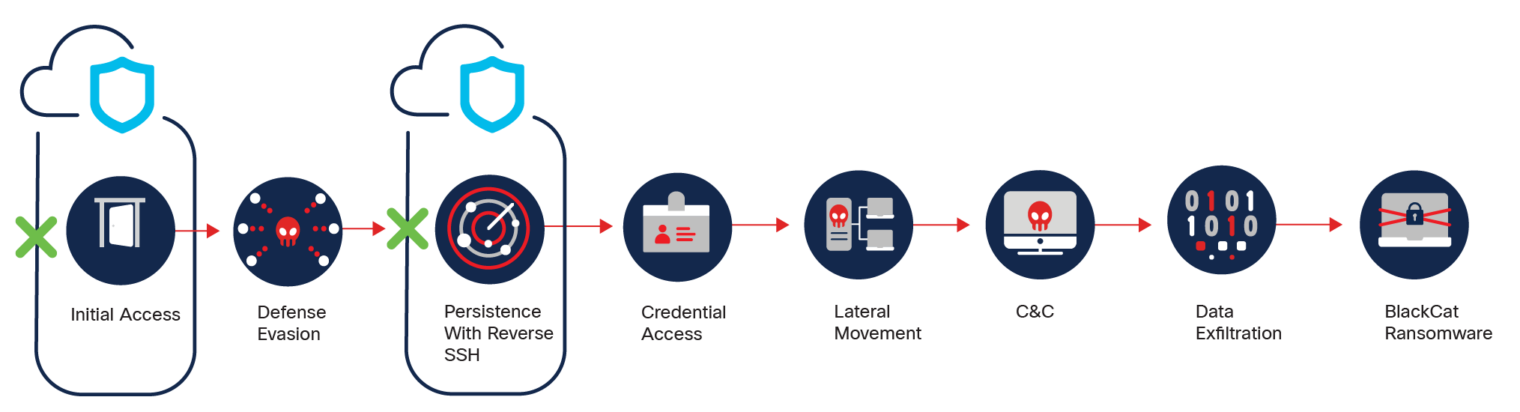
Cisco Umbrella combines Talos threat intelligence with predictive models, providing strong protection for known threat patterns. However, like all feed-based systems, it depends on threats being identified, catalogued, and distributed—a process that takes time.
Source: Cisco
Fortinet's FortiGuard Labs delivers regular updates supplemented by AI-driven analysis. The platform provides real-time threat identification at impressive speeds, though still constrained by the traditional threat intelligence cycle.
Source: Fortinet
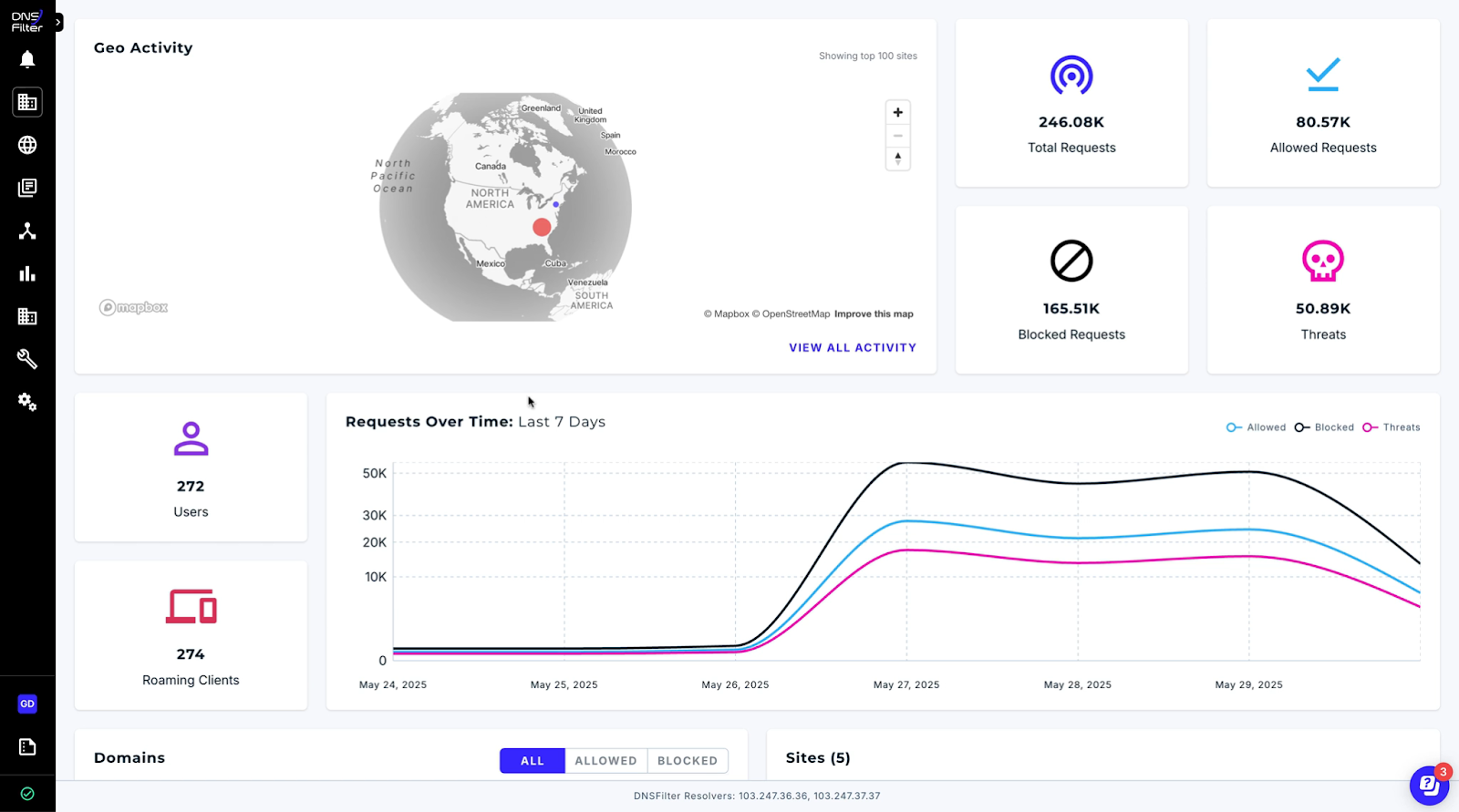
DNSFilter's approach is fundamentally different. By analyzing domain characteristics in real-time rather than relying solely on threat feeds, the platform catches threats the moment they emerge. This 10-day advantage is not merely theoretical; rather, it marks the difference between preventing breaches and responding to incidents. When a phishing campaign launches using newly registered domains, DNSFilter blocks them immediately while competitors wait for threat feed updates.
Source: DNSFilter
Deployment complexity exposes target markets
Implementation requirements reveal each platform's intended audience.
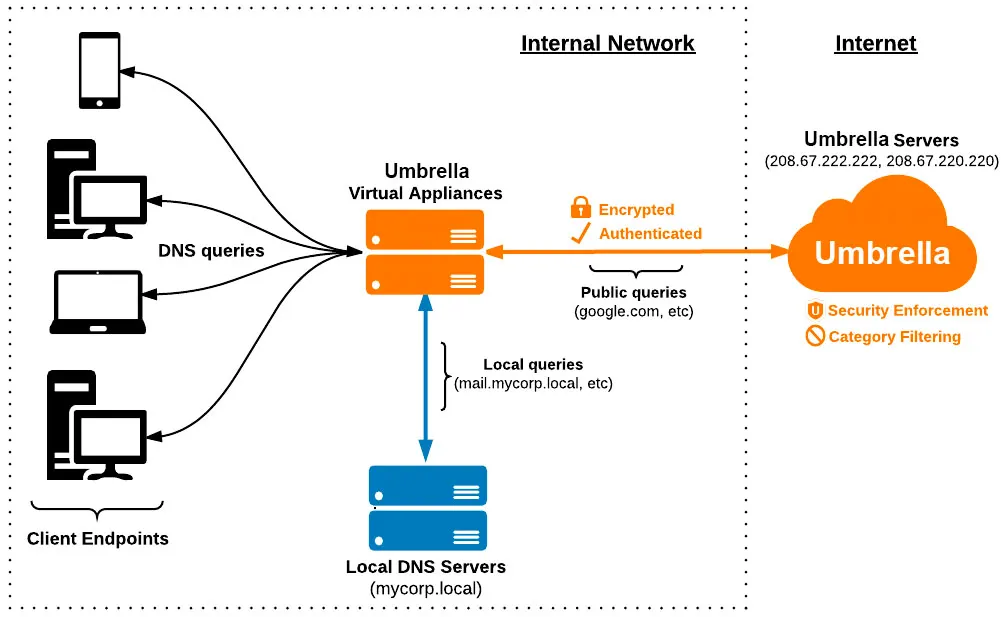
Cisco Umbrella's basic DNS setup appears simple, but organizations wanting production-ready deployments face multiple components: virtual appliances for AD integration, roaming client deployment (or complex migration to Secure Client), IPsec tunnels or proxy configuration for web gateway features. Each component requires specialized knowledge and ongoing management.
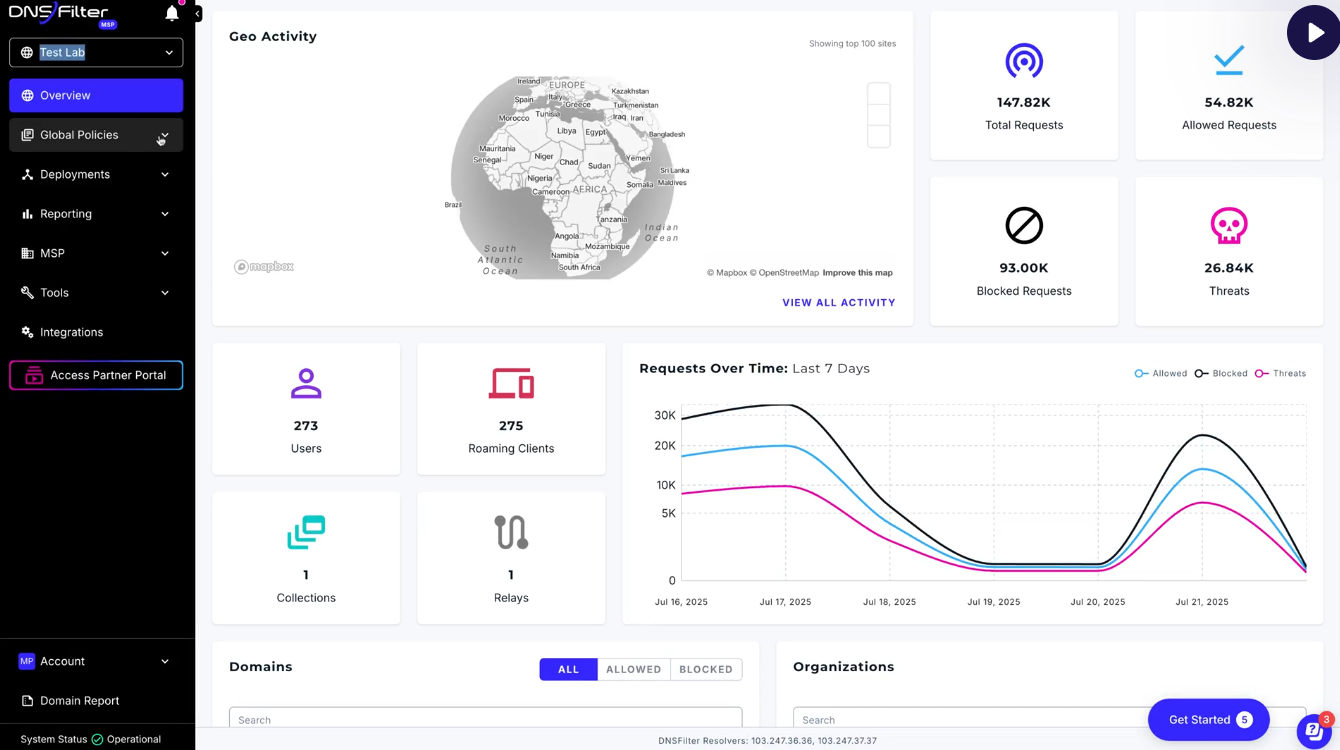
DNSFilter deploys differently. Point DNS to DNSFilter's servers, install lightweight roaming clients where needed, configure policies through the web interface. No consultants required, no certification needed, no complex integrations. MSPs particularly value this efficiency—they can onboard new clients quickly and manage hundreds through a single dashboard.
Why MSPs choose DNSFilter
The Managed Service Provider market provides clear verdict on platform effectiveness. MSPs need solutions that deliver results, scale efficiently, and maintain margins.
While Cisco offers MSP programs with multi-tenant capabilities, the complexity of deployments and quote-based pricing create challenges. Larger MSPs with enterprise clients may find success, but mid-market focused MSPs often struggle with Umbrella's operational overhead.
Fortinet maintains strong enterprise firewall market share and offers MSSP programs, but the Security Fabric's complexity and certification requirements present barriers. Managing multiple client deployments effectively requires significant expertise investment.
DNSFilter was built specifically for MSP success. The multi-tenant dashboard enables efficient management at scale. Branding options allow service differentiation. Direct PSA integrations streamline operations. The platform's recent Zorus acquisition further demonstrates MSP commitment. With an MSP Customer Advisory Board guiding development, DNSFilter evolves with partner needs.
The numbers speak clearly: over 43,000 organizations trust DNSFilter, with MSPs representing a critical segment. When professionals staking their reputation on security tools consistently choose DNSFilter, it validates both the technical superiority and operational model.
Source: DNSFilter
Cisco Umbrella vs Fortinet vs DNSFilter: Making the right choice
Your choice depends on organizational requirements, resources, and operational philosophy.
Choose Cisco Umbrella if:
- You're a large enterprise with dedicated security teams
- You have existing Cisco enterprise agreements and ecosystem investment
- You need broad SASE capabilities beyond DNS security
- You can manage multiple components and complex configurations
- Budget accommodates premium enterprise pricing
Choose Fortinet if:
- You require comprehensive network security including next-generation firewalls
- Hardware acceleration and deep packet inspection are critical
- You have certified expertise or can develop it
- You want an integrated security fabric from a single vendor
- You're prepared for firmware management and varying support quality
Choose DNSFilter if:
- You need threat detection that catches malicious domains 10 days before competitors
- Fast deployment and simple management are priorities
- You're a mid-market organization (1,000-5,000 employees) seeking enterprise-grade protection
- You're an MSP requiring efficient multi-client management
- You want transparent pricing and world-class DNS performance
- Superior threat detection matters more than feature complexity
See how DNSFilter compares to Fortinet and Cisco Umbrella. Start your free trial today.
The reality confronting security teams is clear: threats emerge faster than ever, yet IT resources remain constrained. While Cisco Umbrella and Fortinet build increasingly complex platforms for large enterprises, DNSFilter demonstrates that superior threat detection, which catches threats 10 days before traditional feeds, can be achieved without adding operational complexity.
For mid-market organizations and MSPs serving multiple clients, the choice becomes obvious. When you can deploy protection in minutes that catches threats others miss for days, why accept anything less? That's why over 43,000 organizations trust DNSFilter. Sometimes the most sophisticated choice is the one that simply works better.

 SecureTransit for MSPs: Digital Privacy Without Another Tool to Manage
MSPs need to boost client security without sacrificing efficiency or margin. Every extra tool, console, or license just adds overhead and slows down service delivery.
Privacy is a classic example. Clients want their remote and hybrid users protected from the networks they connect through and the trackers profiling them, but most solutions add another siloed tool and more operational work.